Welcome to Chichén Itzá.
Imagine walking through a great stone city where pyramids rise above the trees and the air feels warm and still. The jungle hums softly around you. Beneath your feet are pathways built more than 1,000 years ago.
This ancient Maya city, built in what is now Mexico’s Yucatán Peninsula, was once one of the most powerful and advanced cities in the world. Between about 800 and 1200 CE, it became a center of science, ceremony, trade, and imagination.
The name “Chichén Itzá” means “At the mouth of the well of the Itzá.” It refers to deep natural wells in the area called cenotes—hidden underground water sources that made life possible in a land without rivers. In a region without flowing streams, these freshwater sinkholes were essential for survival.
But Chichén Itzá was more than a place to live. It was a place to observe the sky. To build with intention. To design structures that reflected the movements of the sun and stars.
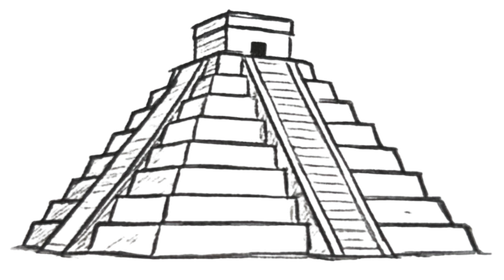
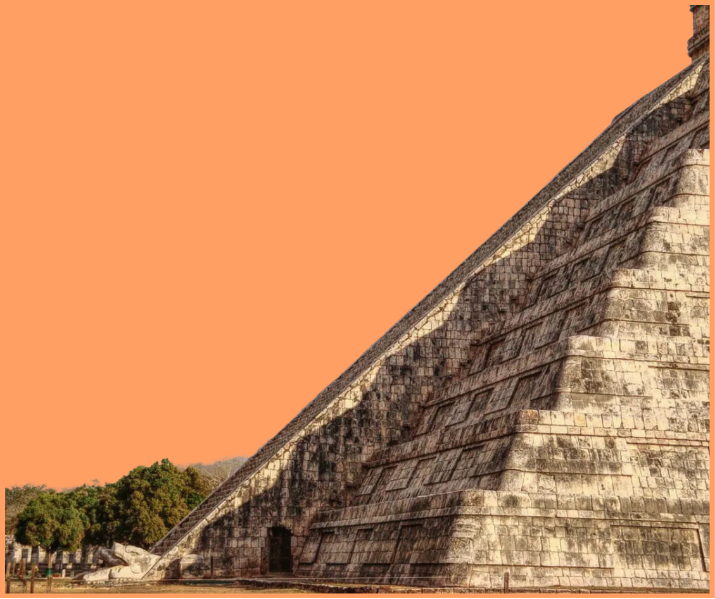
At the heart of the city stands its most famous pyramid — the Temple of Kukulkán. Carefully engineered with mathematical precision, it reflects the Maya understanding of geometry, astronomy, and balance.
Chichén Itzá was not built by accident.
It was built by thinkers, planners, and visionaries.
When we explore this city today, we are not just looking at ancient stone. We are stepping into a world of knowledge.